
Battery management system and Intelligent power mode in solar street lights
Battery management system and Intelligent power mode in solar street lights
Introduction
The solar controller is often likened to the heart of a solar street light—a metaphor apt not merely because it serves as the system’s core, but because, much like a heart regulating blood flow, it precisely manages the “direction” and “rate” of the electrical current. During the day, it directs the energy generated by the solar panels into the battery; at night, it smoothly releases the power stored in the battery to illuminate the light source. Yet, proving even more intelligent than the human heart, it actively prevents the “blood flow” from becoming too rapid (overcharging), too sluggish (undercharging), or even flowing in reverse (reverse charging). However, what truly endows this “heart” with the wisdom to extend its lifespan are its internal Battery management system (BMS) and Intelligent power mode (IPM). The BMS acts like a round-the-clock vital signs monitor, continuously tracking battery voltage, temperature, and capacity (What’s battery capacity and how to calculate it?), and decisively severing the circuit should critical danger thresholds be reached. The IPM, conversely, functions as a predictive vascular specialist, dynamically adjusting output power based on remaining battery capacity and load demands to prevent premature battery aging caused by deep discharge or prolonged high-load operation. Now, let us delve into the main text to explore exactly what constitutes the BMS and IPM within a solar street light system, and discover how these two components work in tandem to exponentially extend the battery’s operational lifespan.

What’s BMS (Battery management system) in solar street light?
In a solar street lighting system, the BMS(Battery management system) acts as the battery’s personal assistant, serving as the interface between the chemical energy stored in the battery and the electrical demands of the controller and light-emitting diodes (LEDs and more about LEDs). It primarily handles two tasks: first, determining the appropriate current and voltage (i.e., power) at which the battery should supply power to the light source; and second, ensuring that the electricity generated by the solar panels is safely stored in the battery. As we can see, these functions are all related to voltage and current. In fact, the BMS primarily ensures the coordinated operation of the solar panels, battery, and light source by monitoring these parameters. In addition to voltage and current, temperature is also a critical parameter. Prolonged operation at high temperatures can lead to premature battery degradation, which is why many rechargeable devices should not be used in high-temperature environments (when the battery is hot).
The BMS (Battery management system) continuously monitors the voltage of each individual cell and the current of the entire battery pack. When the voltage becomes too high, it immediately cuts off the charging process to prevent overcharging. This is similar to the charging limit on an iPhone battery, which prevents the voltage from rising further when the lithium-ion battery (More about lithium battery) is nearly full (e.g., 90%–100%). At these levels, the risk of electrolyte decomposition, thickening of the SEI film, and increased lithium deintercalation stress significantly rises, accelerating capacity degradation. At the same time, when the voltage drops too low, the BMS (Battery management system) immediately disconnects the load to prevent over-discharge. We know that the consequences of excessively low battery voltage are even more severe: when the voltage is too low, lithium ions are excessively deintercalated, the electrode structure is damaged, and some lithium becomes “dead lithium” that can no longer be charged or discharged—this is what we commonly refer to as the battery being “starved to death.” Finally, the BMS also performs balancing among the cells to prevent the weakest cell from dragging down the entire pack. It is important to distinguish that the BMS manages only the battery’s “safety limits,” while the MPPT (Maximum Power Point Tracking) system built into the charge controller operates independently, specifically dedicated to optimizing battery charging. It is responsible for “extracting” more energy from the solar panels; studies show that the MPPT system can capture approximately 15% more energy during the day and store it in the battery compared to PWM charging and discharging technology.

What’s intelligent power mode in solar street light?
Unlike grid-connected streetlights, solar streetlights do not require the installation of a distribution cabinet to centrally control their on/off status. At dusk, as light levels gradually decrease, the output voltage of the solar panels drops. When this signal is transmitted to the controller, it detects that night has fallen and immediately supplies current to the LED modules, causing the streetlight to turn on automatically. Currently, mainstream solar streetlights (especially all-in-one models) are typically equipped with microwave or timer dimming features (What’s timer dimming in solar street lighting?). Take microwave sensing as an example: when the built-in microwave sensor detects no moving objects, the controller reduces the output current, automatically lowering the luminaire’s luminous flux to 20% or 30%, thereby conserving energy. Timer dimming operates on a similar principle, with the key difference being that it adjusts the output based on the controller’s built-in dimming profile to modify the luminous flux. Although these modes can reduce battery consumption, they cannot prevent the battery from being completely depleted during extreme weather conditions. So, is there another intelligent controlling mode? The answer is the controller’s intelligent power mode.
When a solar street light is equipped with a controller featuring an intelligent power mode, multiple intelligent power modes can be selected. In this case, the load power is automatically adjusted based on the battery charge level, rather than operating at full power every night, thereby effectively coping with extreme weather. It acts like a thrifty steward: when the battery is fully charged, the lights operate normally; when the battery charge drops or during consecutive rainy days, it automatically reduces power and current output, rationally distributing the limited power over the entire night or multiple nights to prevent the lights from completely shutting down on any given night. Unlike the Battery management system (BMS), which focuses on protecting the battery “from damage,” the smart power mode prioritizes the efficient utilization of remaining charge. By monitoring battery voltage and remaining capacity in real time via the controller, it dynamically adjusts the LED drive current (What’s LED drive current and how to set it by controller and LED driver?) —enabling a stepwise reduction in power. This approach not only extends lighting duration but also prevents premature battery aging caused by deep discharge, thereby striking the optimal balance between performance and lifespan.

How do BMS and IPM work together to prolong the service life of solar street lights?
The practical role of Battery management system in solar street lighting systems
In solar lighting systems, the BMS (Battery management system) functionality is built into the solar controller (charge and discharge). As we know, the solar controller is responsible for storing the energy generated by the solar panels in the battery (i.e., the charging process) and delivering the stored energy to the LEDs (i.e., the discharging process). The Battery management system monitors and controls every charging and discharging cycle. For each charge and discharge cycle, the BMS provides four core protection functions: overcharge protection, over-discharge protection, battery balancing, and thermal protection. The BMS records voltage, current, and temperature data (Working temperature of LEDs and LED driver) at both the cell and pack levels. These parameters determine whether a lithium-ion battery will age slowly or fail prematurely. Excessively high or low cell voltages can lead to premature cell failure. High voltages cause electrolyte decomposition, swelling, and accelerated aging, while low voltages alter the battery’s internal structure, resulting in reduced capacity or even complete failure. Additionally, operating batteries at high or low temperatures accelerates aging. The BMS (Battery management system) prevents these issues, thereby extending both battery and luminaire lifespan. Its battery balancing function prevents overcharging or over-discharging of individual cells, slowing the overall degradation of the lithium-ion battery pack and making it more durable.
The practical role of Intelligent power mode in solar street lighting systems
In solar lighting systems, battery life is not measured in “years” but in “charge-discharge cycles.” This is similar to an electric scooter: if you ride it a lot every day and consume a lot of power, the battery will degrade much faster than one used only occasionally. The quickest way to shorten the lifespan of a lithium-ion battery is to over-discharge it every day. Take a lithium iron phosphate (LiFePO4) battery as an example: if the depth of discharge is limited to 50%, the number of charge-discharge cycles can reach 4,000; but if the depth of discharge is 80%, the lifespan drops to about 2,000 cycles; if the battery is deeply discharged (almost completely drained) every day, its lifespan (What about street light’s lifespan?) will decline sharply. The core of IPM lies in controlling the battery’s depth of discharge (DoD): when the battery charge is high, the output is relatively high; when the charge is low, the output is relatively low. This ensures that the overall depth of discharge does not exceed 70% or even less. The role of IPM (Intelligent power mode) is precisely to dynamically adjust the output power while ensuring lighting needs are met, thereby preventing the BMS from setting the lower limit too low and causing the battery to be “drained dry” every night. To put it simply, IPM acts like a brake on the battery’s “deep discharge,” allowing the battery to operate at only 50% to 70% of its capacity each time, thereby extending its service life through a gentler cycling process.
BMS and IPM working together to prolong the lifetime of solar street lights
Both the BMS (Battery management system) and IPM (Intelligent power mode) functions are integrated into the controller (Solar street light controller and its cost); each performs its own specific role while complementing the other to extend the lifespan of solar street lights. The BMS is like a soccer goalkeeper, firmly guarding the three critical safety thresholds of voltage, current, and temperature. As soon as the ball enters the penalty area (i.e., overvoltage, overcurrent, or overtemperature conditions), it immediately intervenes to either intercept the ball or clear it out of the penalty area. Of course, the goalkeeper has several key players assisting him in defense—the center backs and fullbacks—and the IPM fulfills a similar role. They can monitor the ball’s movements in real time to make appropriate adjustments, keeping the ball as far as possible from the dangerous penalty area to prevent conceding goals and ultimately losing the game. Simply put: the BMS holds the line to prevent irreversible battery damage, while the IPM provides fine-tuned control to minimize battery degradation and prevent extreme conditions. Only through the coordinated cooperation of both the BMS (Battery management system) and IPM (Intelligent power mode) can battery lifespan be truly extended.
ZGSM solar street light solutions with BMS and IPM
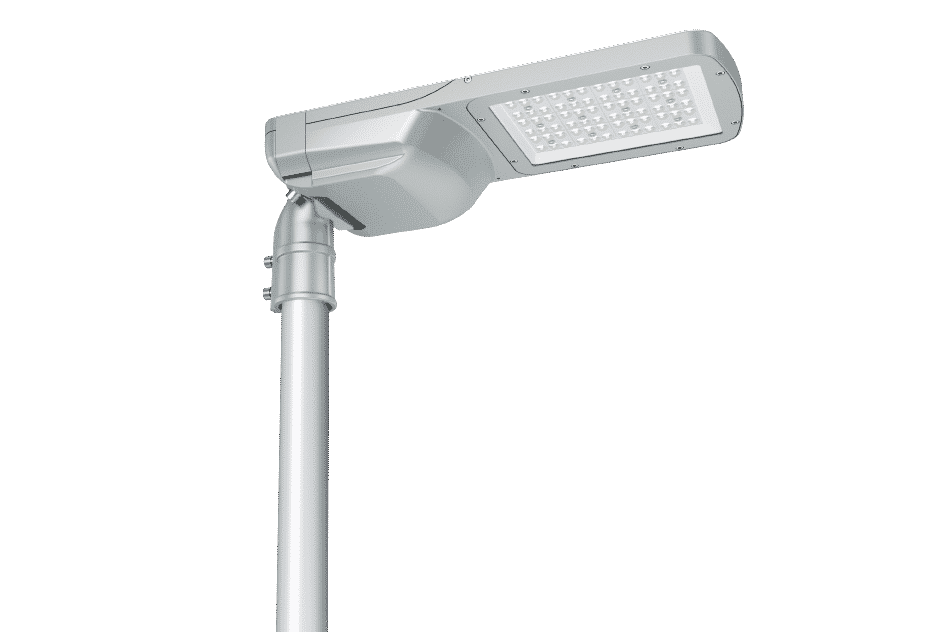
ZGSM offers a comprehensive range of solar street lighting products (ZGSM solar street lighting solutions), encompassing various series such as all-in-one, all-in-one-two, and split-system solar streetlights. The controllers integrated into our entire lineup of streetlights come standard with both BMS (Battery management system) and IPM functionalities. The standard battery capacities and solar panel configurations for our products are determined by our technical team through rigorous calculation and validation; furthermore, should a project present unique requirements, we are fully capable of providing customized solutions. Regarding system configuration, the BMS serves as an essential, mandatory feature, while the IPM function offers flexible adaptability. The IPM system allows clients to independently select their preferred operating mode—configurable to Off, Low, Medium, High or a Custom setting—thereby effectively meeting the diverse operational needs of different users.


Summary
Using the metaphor of a “heart,” this article explains the central role of solar controllers in streetlight systems—precisely managing the ‘direction’ and “flow rate” of current—and highlights that the integrated Battery management system (BMS) and Intelligent power mode (IPM) are key to extending the system’s lifespan. Serving as the battery’s “personal caretaker,” the BMS monitors voltage, current, and temperature in real time, providing overcharge, over-discharge, equalization, and thermal protection to prevent the battery from decomposing due to high voltage or “starving” due to low voltage. Complementing this, the IPM acts as a “meticulous steward,” dynamically adjusting LED output power based on remaining battery charge to control the depth of discharge (DoD), thereby avoiding deep discharges every night to maximize the number of charge cycles. The two work in tandem: the BMS acts like a goalkeeper, firmly guarding the safety line and decisively cutting off the circuit at critical danger points; the IPM acts like a defender, predicting and adjusting power in real time to keep the ball (battery status) away from the penalty area (risk of damage). Through the BMS’s rigid protection and the IPM’s flexible regulation, the system prevents irreversible damage while reducing daily wear and tear. Finally, taking the ZGSM full series of solar street lights as an example, we demonstrate that their controllers come standard with BMS and offer optional IPM functionality, proving that this combined solution can significantly extend battery cycle life and enhance the overall reliability of off-grid lighting systems (Off-grid and on-grid street light).
Related Products


Related Blogs


Related Cases


People also ask
Author introduction

Hello Customers,
My name is Taylor Gong, I’m the product manager of ZGSM Tech. I have been in the LED lights industry for more than 13 years. Good at lighting design, street light system configuration, and bidding technology support. Feel free to contact us. I’m happy to provide you with the best service and products.
Email: [email protected] | WhatsApp: +8615068758483