
Automatic solar street light with timer dimming or motion sensor
Automatic solar street light with timer dimming or motion sensor
Introduction
Today, communities, municipalities, and individuals urgently need to reduce emissions, lower costs, and build resilient infrastructure. Against this backdrop, solar lighting is gaining increasing acceptance in both public and residential lighting due to its unique value. These changes are keenly felt by industry professionals, as the purchase volume of electric streetlights (More about ZGSM AC street lights) is gradually decreasing, and their share is being replaced by solar streetlights. From remote mountainous areas to busy urban thoroughfares, it brings light where it’s needed. This is not just about illumination; it’s about freedom, as its independence from the power grid gradually frees people from the constraints of energy bills, cables, and carbon emissions. This article will delve into the application characteristics of solar street lighting, primarily focusing on two types: automatic solar street lights with motion sensor and automatic solar street lights with timer dimming. It will also briefly describe how to choose between the two. For solar street lights with timer dimming, we will also focus on analyzing how to set a more reasonable dimming curve to help you find a balance between solar lighting and sustainable development.
What‘s automatic solar street light with motion sensor?
Solar street lights with motion sensors represent an upgraded solar lighting system incorporating integrated sensors. Building upon traditional solar street lights (comprising solar panels, batteries, LED luminaires, and controllers), they incorporate microwave sensors or passive infrared (PIR) sensors (Motion sensor vs PIR sensor). This type of solar street light is most commonly found in integrated or two-part solar street light designs, with its core operating principle being the adjustment of luminaire output based on sensor occupancy detection. During periods of no human or vehicle presence (sensor unoccupied), the luminaire maintains a lower brightness level to conserve unnecessary power consumption; Upon detecting pedestrian or vehicular movement within range (sensor occupied), it triggers a signal—such as a 0-10V dimming signal or TTL level signal—to the solar controller. This prompts the luminaire to rapidly increase to a higher brightness level within seconds, enhancing safety for passing traffic and pedestrians. Once the target leaves the area, the luminaire reverts to its low-brightness mode. This control mechanism significantly reduces the solar streetlight’s power consumption during night-time operation. Consequently, both the battery capacity and solar panel size within the solar system can be appropriately scaled down, thereby lowering the initial investment cost for the entire system. Thus, solar street lights equipped with motion sensors is automatic solar street lights which represent a more energy-efficient, cost-effective, and intelligent green lighting solution. For larger area applications requiring multi-lamp coordination, check out our smart motion sensor master-slave solutions.
What’s automatic solar street light with timer dimming?
Solar street lights with timed dimming functionality represent a type of intelligent or smart solar street lighting system, designed to provide illumination only when required. They automatically dim or switch off during night-time periods of reduced traffic flow, gradually increasing brightness as urban activity intensifies towards dawn. This dimming capability relies primarily upon the solar charge and discharge controller – the heart of the solar street light system. We must embed the dimming profile within the solar controller. At night, the controller adjusts its output according to the pre-set curve, thereby regulating the luminaire’s brightness. Combined with the dusk-to-dawn switch (What’s dusk to dawn function?) functionality inherent to solar street lights, this enables autonomous lighting. The timer dimming function not only ensures adequate illumination when required but also minimizes unnecessary light pollution during periods of low traffic flow. This approach (automatic solar street lights with timer dimming) significantly reduces the environmental impact of solar street lights.
How to choose the suitable one for your project?
Solar street lighting is rarely operated continuously throughout the night, as this inevitably increases initial investment, shortens battery lifespan, and causes unnecessary illumination (What’s light pollution?). When selecting motion sensor, timer dimming, or a combined mode, you must carefully assess whether footfall and vehicle traffic at the lighting location follow a regular pattern, whether distinct peak or off-peak periods exist, and the actual lighting requirements during different time segments. ZGSM maintains that when choosing between motion sensor or timer dimming automatic solar street lights, the decision should be based on meeting your actual lighting requirements. For instance, in urban road lighting applications, peak vehicle traffic typically occurs before 10:00, gradually decreasing from 10:00 to 12:00, further reducing from 12:00 to 5:00 AM, and then gradually increasing until dawn. In such scenarios, solar street lights with timer dimming prove more suitable, as they can be segmented according to traffic volume. Conversely, in rural areas where both pedestrian and vehicular traffic are sparse and lack distinct peak periods, solar street lights with motion sensors are preferable. These activate only when pedestrians or slow-moving vehicles pass by. Finally, in settings such as industrial estates, squares, or car parks, traffic and pedestrian flow remain relatively stable before 10pm with higher illumination requirements. After 10pm, traffic gradually decreases. A combined solution of timer dimming and motion sensors is therefore optimal. This approach satisfies peak-period lighting demands while also meeting the illumination needs of occasional pedestrians or vehicles during off-peak hours.
Best dimming profile for solar street with timer dimming
Dimming profile of solar street lights for urban roads
The recommended typical dimming profile for urban roads is as follows: from 18:00 (sunset) to 22:00, the luminaires maintain 100% brightness; from 22:00 to 05:00 the following morning, brightness is reduced to 30%; and from 05:00 until dawn, brightness rises back to 70%–100%. This dimming strategy follows a progression of “full brightness at dusk → dimmed in the late night → increased again in the early morning,” primarily adjusting in response to fluctuations in urban road traffic volume: pedestrian and vehicular traffic is heaviest during the evening hours, followed by the early morning, and is lightest around midnight. This design adheres to the requirements for various road lighting classes outlined in the European standard EN 13201, emphasizing the determination of the appropriate lighting class based on factors such as traffic volume. In the process of selecting a lighting class, in addition to traffic volume, multiple other factors must be considered—including maximum road speed limits, traffic composition, lane separation, intersection density, roadside parking, ambient brightness, and navigational requirements. For further details, please refer to our blog post: “Key factors to consider in the design of road lighting projects.” Taking traffic volume as an example: the higher the traffic volume, the higher the corresponding weighting value. The lighting class can be determined using the formula M = 6 – SWV; a lower resulting Mx value indicates a higher lighting requirement, while conversely, a higher value indicates a lower requirement. For AC streetlights, adjustments can be made via dimming profiles built into the power supply unit; solar-powered streetlights, meanwhile, now typically utilize dimming profiles integrated directly into the all-in-one luminaire unit.

Dimming profile of solar street lights for conflict areas
For solar streetlights situated in conflict zones—such as pedestrian crossings, ramps, and intersections—the dimming profile can be configured using the same three-stage dimming curve described previously for general urban roads. The distinction lies in the fact that these conflict zones have relatively higher lighting requirements; therefore, during the period from 22:00 to 05:00 the following day, the brightness level can be set to between 50% and 70%, thereby striking a balance between safety and energy conservation. Naturally, this specific time slot can be further subdivided: for instance, the brightness could be set to 70% from 22:00 to 02:00, and then reduced to 50% (with a minimum threshold of 30%) from 02:00 to 05:00, thereby further minimizing unnecessary energy consumption. In contrast to the 30% brightness level typically adopted for general roads during late-night hours, the illumination in conflict zones should not be reduced too drastically; maintaining adequate lighting ensures sufficient reaction time for drivers and provides the necessary vertical illuminance for pedestrians (specifically at crosswalks). Vertical illuminance refers to the requirement that pedestrian crossings must ensure the vertical plane of a pedestrian (at a height of 1.5 meters) is sufficiently illuminated, enabling drivers to clearly spot them; otherwise, pedestrians crossing the street may be difficult to detect. For further details, please refer to our blog post: “Lighting for pedestrian crossings.” Furthermore, higher illumination levels allow drivers in conflict zones to better observe the movement of both vehicles and pedestrians within the area, thereby affording them a quicker reaction time to handle sudden incidents and help prevent traffic accidents. Concurrently, given that solar streetlights are constrained by battery capacity, appropriately reducing illumination levels helps ensure continuous operation throughout the entire night while also potentially lowering initial investment costs.

Dimming profile of solar street lights for rural roads
For solar streetlights on rural roads, it is recommended to adopt a combined mode featuring time-based scheduling and motion sensing. For instance, a typical configuration might involve keeping the lights at 100% brightness from sunset until 8:00 PM. From 8:00 PM to 11:00 PM, the lights would operate at 100% brightness when pedestrians or vehicles are detected, but switch to a reduced power mode (e.g., 20% brightness) when the area is unoccupied. From 5:00 AM until sunrise, the lights could be set back to 100% brightness to accommodate residents’ commuting and work-related needs. The primary rationale behind this configuration is the observation that, in rural areas, there are typically very few pedestrians on the roads after 8:00 PM; for the occasional passerby, the microwave sensors can dynamically adjust the light output to ensure adequate illumination. During the 11:00 PM to 5:00 AM window, brightness can be reduced to a dim 20% or even switched off entirely (0% output) to conserve energy. This is because residents are generally asleep during these hours, resulting in virtually no demand for lighting; indeed, excessive brightness during this period could actually disrupt their rest. By configuring rural solar streetlights in this manner, safety for travelers is ensured while energy conservation is maximized, thereby perfectly suiting the specific usage scenarios of rural areas at night. This type of dimming profile (configuration) is also applicable to parking lot lighting (ZGSM parking lot lighting solutions), though the specific time points may require slight adjustments—for example, the 8:00 PM threshold could be shifted to 10:00 PM to better align with the typical fluctuations in vehicle traffic within a parking facility.

Dimming profile of solar street lights for sports courts
Solar lighting systems for sports courts are typically utilized for lower-tier illumination requirements, as standard solar setups for large-scale stadiums are generally unable to meet the requisite illuminance levels. Multisport courts—designed to facilitate evening play and accommodate a diverse range of athletic activities—are commonly found in residential communities, public parks, and fitness centers. Ideally, the lighting for such courts should meet the requirements of the EN12193 Class III standard (EN12193 sports lighting standard); typically, 4 to 6 light poles are distributed around the perimeter of the court. Taking a six-pole configuration as an example, installing 6 pieces 100W solar floodlights constitutes a practical and reasonable solution. Given the specific usage patterns of these courts—which typically require only 3 to 5 hours of operation per session and do not necessitate motion-sensing capabilities—a solar flood lighting system equipped with a timer dimming function is the most suitable choice. Furthermore, this 3–5 hour operational duration allows for a significant reduction in the system’s requirements for solar panels and battery storage, thereby minimizing initial capital investment. Naturally, if your specific project demands higher illuminance levels, the wattage of the light fixtures, as well as the capacity of both the solar panels and the batteries, would need to be substantially increased—to levels approximately three times greater than those of the standard solution described above.

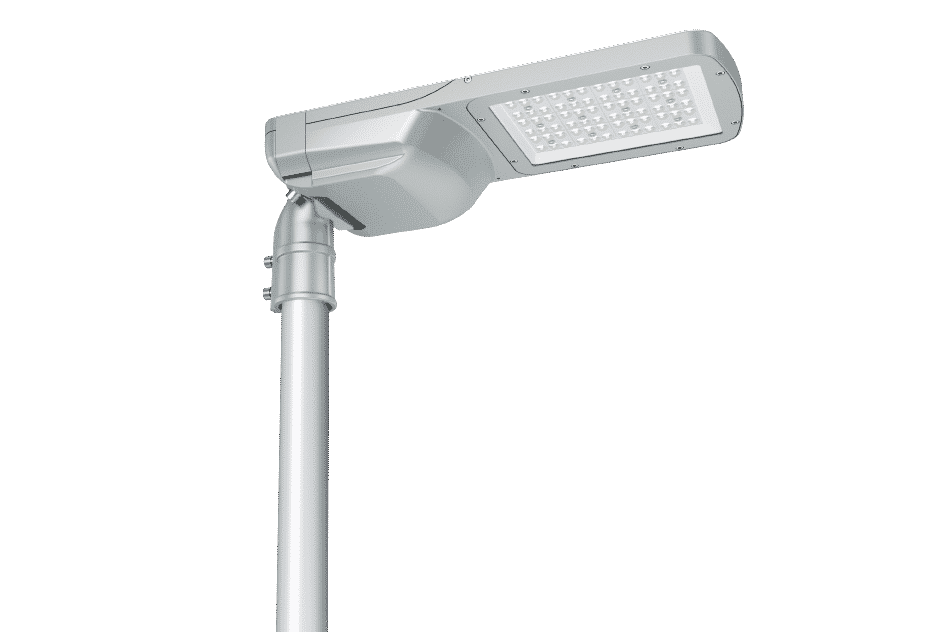
ZGSM solar street lights with timer dimming and motion sensor


Summary
This article systematically compares two mainstream intelligent control methods for solar streetlights—motion sensor and timer dimming (More timer dimming curve)—aiming to help users make the optimal choice for different application scenarios. Solar street lights with motion sensor use sensors to detect pedestrian and vehicle activity in real time. When no one is present, they maintain low power consumption, and when a target is detected, they quickly increase brightness, minimizing energy consumption while ensuring necessary lighting. This is particularly suitable for rural roads and parking lots where pedestrian and vehicle traffic is highly unpredictable. Timer dimming solar streetlights automatically adjust brightness according to preset time periods. A typical application is a three-stage curve for urban roads: “full brightness in the evening → 30% at night → increased brightness in the early morning.” Their operation is stable and reliable, suitable for scenarios with clear traffic patterns. For conflict areas such as pedestrian crossings and intersections, where lighting requirements are higher, it is recommended to maintain 50%-70% brightness at night to ensure vertical illuminance for pedestrians and reaction time for drivers. Rural roads should adopt a timer dimming + motion sensor combination mode, balancing energy saving and on-demand lighting. Sports fields, due to concentrated usage times, are recommended to use an automatic solar street light with timer dimming solution to meet 3-5 hours of high brightness requirements. The article also introduces the EN 13201 standard, clarifying the relationship between lighting levels and factors such as traffic flow, providing a basis for scientifically setting dimming curves. The ZGSM series products can flexibly adapt to various control strategies, helping users find the optimal balance between safety, energy saving, and initial investment. Contact ZGSM for more information.
Related Products


Related Blogs


Related Cases


People also ask
Author introduction

Hello Customers,
My name is Taylor Gong, I’m the product manager of ZGSM Tech. I have been in the LED lights industry for more than 13 years. Good at lighting design, street light system configuration, and bidding technology support. Feel free to contact us. I’m happy to provide you with the best service and products.
Email: [email protected] | WhatsApp: +8615068758483