
How to fix flickering LED lights – causing analysis and solutions
How to fix flickering LED lights – causing analysis and solutions
Introduction
LED lights are the most popular choice of lighting in residential and commercial spaces because they are highly energy efficient, have a long life and are environmentally friendly. In practice however many users are plagued by a common and annoying problem: flickering LED lights. This fluctuation in brightness not only affects the quality of light, but also may cause eye strain, headaches and even reduced concentration over time, posing risks to eye health and work efficiency. In more serious instances, constant flickering may also indicate electrical dangers like issues with internal components (e.g. low-grade power supplies), poor wiring connections or fluctuations in the mains voltage. These factors not only accelerate the aging and shorten the lifespan of the lights (How long do LED lights last?) but may also pose some safety risks.
Replacing traditional fluorescent or incandescent bulbs is usually straightforward, but when dealing with LED lights, the causes of flickering are often less obvious. Fortunately, the vast majority of LED light flickering issues can be diagnosed and resolved on your own, without necessarily requiring professional repair. The problems typically center on a few easily checked areas, such as whether the connecting is good, whether the LED driver meets quality standards, or whether the heat dissipation design is adequate. ZGSM has previously analyzed the causes of LED light flickering / flash, so this article will provide only a brief overview, focusing instead on a clear, step-by-step, practical solution. Based on the LED light flickering symptoms, we’ll help you identify possible causes and provide corresponding solutions. We hope this will help you completely resolve this issue and enable your LED lighting system to truly deliver stable, safe, and long-lasting performance. Now, let’s get down to know how to fix flickering LED lights.
Main reasons causing LED light flickering
The fundamental cause of LED light flickering is continuous fluctuations in the light source’s output power. Simply put, the light is rapidly and repeatedly turning on and off at a high frequency. Unlike incandescent bulbs, the LED chips in LED fixtures do not exhibit an afterglow effect caused by residual heat from a filament; they cannot buffer the changes in light caused by power supply fluctuations. As a result, they are particularly sensitive to the stability of the power supply—even the slightest abnormality in the power supply will result in visible flickering. This refers not only to the power supply’s input voltage but also to the LED chip’s input voltage (i.e., the LED driver’s output voltage).
Low-quality LED driver
The LED driver is the core power supply component of LED lighting fixtures. The market is flooded with low-cost, substandard drivers that are manufactured using crude production processes and cut-corner materials. These devices exhibit extremely high current ripple during operation and lack comprehensive power factor correction (What’s PF?) and pulse-width modulation (PWM) voltage regulation technologies, making them unable to deliver a stable, constant current and voltage. Continuous instability in the output of an LED power supply directly causes high-frequency flickering of the LED light source, which is the root cause of LED light flickering issues in the vast majority of lighting fixtures.

Voltage fluctuations of the power grid
Residential and commercial grid voltages are relatively stable, so the likelihood of LED ceiling lights or downlights flickering due to grid issues is low. This is not the case with industrial power, especially in countries with underdeveloped power grids, where grid voltage can fluctuate significantly during peak usage periods or when high-power equipment in the vicinity is turned on or off. Although most LED drivers have a standard operating voltage range of 90–305 VAC, in extreme cases where the actual grid voltage exceeds this range, the LED driver (More about LED driver) cannot maintain a stable voltage. This results in intermittent power supply, causing LED light flickering frequently and vary in brightness. In severe cases, LED lights (such as LED streetlights) may fail to start properly.
Poor thermal design of the luminaires
Many low-cost LED fixtures have defects in heat dissipation design, which results in insufficient heat dissipation or improper layout (e.g., the power supply is affected by the heat sink or high-temperature LED chips). In these cases, the fixture is left on for long periods of time and the driver continues to build up heat that cannot be dissipated quickly. If the temperature of the LED driver is higher than the operating temperature range, the over-temperature protection of the LED driver will switch off or reduce the power output automatically. When the device cools down , power is reapplied. This cyclical process results in regular, periodic flickering of the light. This situation commonly occurs under extreme operating conditions, such as outdoor floodlights in summer, factory lights in high-temperature workshops, and enclosed, poorly ventilated canopy lights. For example, Inventronics have a recommended operating temperature range of -40 to 90 degrees Celsius. When temperatures become too high, they typically activate a “driver guard” function (Functions of LED driver which matters its price), which reduces output to allow the temperature to return to normal (see the left figure below). With low-quality power supplies, overheating occurs easily, leading to repeated cycling between on and off (i.e., LED light flickering), which in turn shortens the lifespan of the LED driver. Please see the right figure below: Lifetime vs. Case Temperature of LED Driver (MTBF which also refers to the lifetime of LED driver).

Loose or damaged wiring
Such problems are usually the result of errors in production and installation and are faults that can be prevented beforehand. Poor quality control during factory inspection and loose wiring during manual installation can cause loose internal power cables and loose connections within the light fixture. If the wiring is loose it may not make good contact at times and make and break contact at other times. This will cause the power supply to fluctuate which will directly cause the LED light flickering. If this is not addressed over time it can lead to safety hazards such as the fixture burning out or arcing due to poor contact.
How to fix flickering LED lights?
Taking outdoor streetlights as an example, we will provide basic troubleshooting guidance and corresponding corrective actions for each type of malfunction. By analyzing the symptoms, we can rule out causes that are unlikely to result in this flickering, thereby reducing unnecessary troubleshooting steps and know how to fix flickering LED lights.
Low-quality LED driver causing flicker – phenomenon and solutions
Symptoms: The light fixture flickers continuously as soon as it is turned on; the flickering is irregular, unaffected by usage duration, and occurs independently. When using a cell phone or camera under the light, noticeable ripples appear on the screen. These two primary symptoms can be attributed to a faulty or low-quality driver. This is the most common cause of LED lighting flickering or strobing; substandard drivers have poor voltage regulation and filtering capabilities, resulting in excessive current ripple and an unstable power supply.
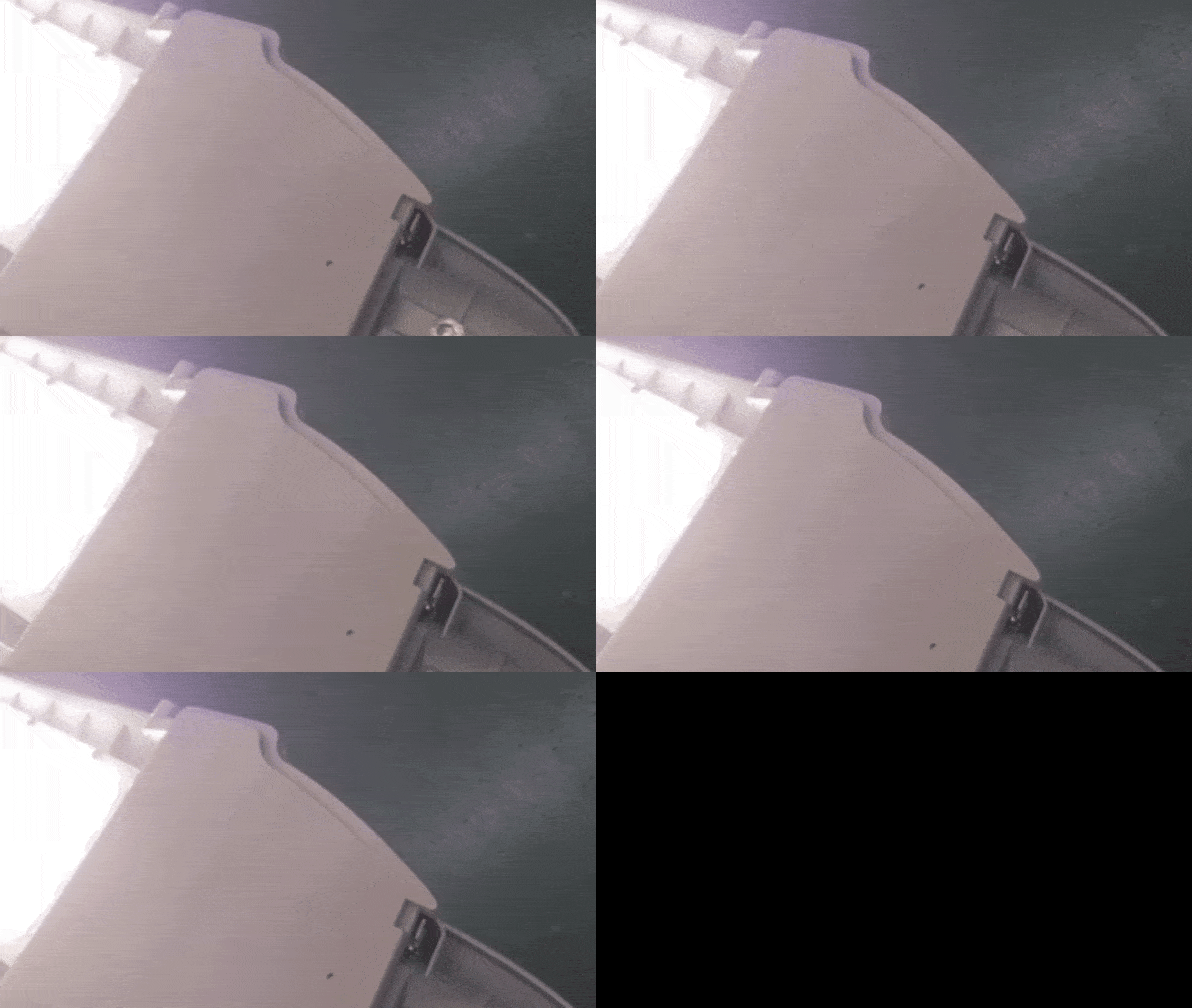
Troubleshooting procedure: Prioritize the replacement test method. Swap the LED driver from the flickering LED with the driver from a properly functioning fixture of the same specifications, and observe the fixture’s operating status. If the originally flickering fixture returns to normal operation and the originally functioning fixture begins to flicker, this confirms that the LED driver is damaged or does not meet quality standards. If the LED light flickering is visible to the naked eye, simply replacing the LED driver with a better one will suffice. However, if the issue involves ripple and your lighting application has high requirements in this regard, you will need to replace it with a high-quality LED driver that matches the specifications. In this case, both the input and output of the LED driver must match the original fixture. If you are not entirely confident about this, please consult a professional, the LED driver supplier, or the luminaire manufacturer (ZGSM, the professional LED light manufacturer). Following shows how to replace the faulty LED driver.

Voltage fluctuations causing flicker – phenomenon and solutions
Symptoms: Multiple LED streetlights along an entire street simultaneously exhibit flickering and synchronized flashing, primarily during peak electricity usage periods; in some cases, certain lights may even fail to turn on. Conversely, the lights operate normally during other times. This phenomenon is typically caused by power grid voltage fluctuations and is commonly observed in areas with underdeveloped power grids; however, improper design of the distribution panel can also lead to this kind of flickering.
Troubleshooting procedure: Observe whether the flickering exhibits collective or periodic patterns to distinguish between individual lamp failures and batch failures (flicker LED lights) caused by power supply issues. Since this type of failure is not due to the lamps themselves, we recommend that customers consult a professional electrician. They can use equipment (such as a multimeter) to measure the mains voltage, verify whether it falls outside the standard operating range of 90–305 VAC, and assess whether the distribution panel is designed appropriately. Of course, in some special cases, the issue may also be caused by a mismatch between the power supply’s operating voltage and the mains voltage—for example, if the LED driver’s input voltage (Input voltage of LED driver) is 220–240 V, but the mains voltage is only 180 V or lower.
Poor thermal design causing flicker – phenomenon and solutions
Symptoms: The light fixture operates normally without flickering when first turned on, but after being on for a period of time, it begins to flicker rhythmically and periodically as the fixture heats up. If the fixture returns to normal operation after being turned off and allowed to cool during the day and then turned back on at night—and this cycle repeats—the fault can be diagnosed as an over-temperature protection issue triggered by inadequate heat dissipation.
Troubleshooting procedure: Leave the light on for an extended period and touch the housing and LED driver area. If the unit feels abnormally hot, the ventilation holes are blocked, the heat sink is too thin, or there is no heat dissipation structure, this indicates a defect in the thermal design. Based on the pattern of LED light flickering and the significant difference in operating behavior between hot and cold states, this fully matches the characteristics of a temperature-controlled protection failure, so wiring and power grid issues can be ruled out. Of course, this fault could also be caused by a power supply of insufficient quality, preventing it from functioning properly at relatively high temperatures. If the heat sink itself is too thin and results in poor heat dissipation, replacing the light fixture is the only solution. If the cause is something else (such as leaves, dust, or an improper design), the problem can be resolved by cleaning the light fixture’s heat sink or modifying the design (e.g., relocating the power supply away from the heat sink). If the issue is caused by a substandard power supply (one that cannot withstand high temperatures), replacing the power supply is a viable solution. Well-designed lighting fixtures should account for extreme weather conditions; currently, many outdoor fixtures are equipped with internal or external thermal guards (NTC and how it works) to prevent damage to the LEDs and power supply caused by excessive heat.
Loose or damaged wiring causing flicker – phenomenon and solutions
Symptoms: The light fixture flickers without a fixed pattern. When the fixture, its bracket, or the wiring connections are gently shaken, the flickering intensity varies—sometimes faint, sometimes strong—and the light occasionally turns off and then automatically comes back on. In some cases, this is accompanied by a faint electrical humming sound, which is typically caused by poor wiring connections. As we can see, this differs from flickering caused by power supply failures or voltage fluctuations, as it exhibits almost no discernible pattern. Additionally, streetlights contain surge protectors and other vulnerable components. Although these can withstand a certain degree of surge impact (such as from lightning), their internal components (varistors) will eventually fail, leading to surge protection failure. In most cases, the luminaire will cease to function and must be replaced promptly.
Troubleshooting procedure: After turning off the power, open the luminaire’s wiring terminals and inspect the internal power cables, connectors, and joint locations one by one to check for loose connections, oxidized wire ends, cable wear, corroded terminals, or poor contact. Focus on identifying potential loose connections caused by factory wiring, post-installation joints, and long-term vibration. Carefully inspect vulnerable components (such as surge protectors and more about SPD) as well; for example, some surge protectors feature indicator lights that signal their operational status when they fail. The solutions to these issues are relatively straightforward: simply retighten all terminal connections, trim oxidized or damaged wire ends, and replace vulnerable components.
ZGSM LED lighting solutions


Summary
This article comprehensively examines the causes of LED fixture flickering and outlines step-by-step troubleshooting methods, providing a practical, ready-to-implement solution. The article first explains that the root cause of flickering lies in continuous fluctuations in the fixture’s output power; since LED chips lack the residual heat from an incandescent filament to act as a buffer, even slight instability in the power supply causes the light to flicker between bright and dim. We then outline the four most common causes of LED flickering, including low-quality, inexpensive power supplies; voltage fluctuations in the power grid—which are common in industrial zones or areas with inadequate power infrastructure; improper heat dissipation design in the luminaires (Working temperature of LEDs and LED driver); and loose connections at the internal terminals. To address how to fix flickering LED lighting, we need to analyze the cause: if the LED light flickers as soon as it is turned on and a rolling ripple pattern is visible when captured by a smartphone camera, this is typically a driver quality issue—simply replace it with a high-quality driver that meets the specified requirements; if multiple lights in a cluster dim and brighten simultaneously during peak power usage, verify whether the on-site mains voltage and wiring in the distribution panel are appropriate; If the lights begin to flicker periodically only after running for a while, clean dust from the heat sinks and optimize ventilation; replace any power supplies that cannot withstand high temperatures. If the flickering becomes significantly worse when gently shaking the light fixture or the wiring connections, disconnect the power and tighten all terminal connections, trim any oxidized or damaged wire ends, and replace any failed consumable components, such as surge protectors. Contact ZGSM for more information.
Related Products


Related Blogs


Related Cases


People also ask
Author introduction

Hello Customers,
My name is Taylor Gong, I’m the product manager of ZGSM Tech. I have been in the LED lights industry for more than 13 years. Good at lighting design, street light system configuration, and bidding technology support. Feel free to contact us. I’m happy to provide you with the best service and products.
Email: [email protected] | WhatsApp: +8615068758483