
Tool-free design for easy street light repairing
Tool-free design for easy street light repairing
Introduction
Street lighting plays a pivotal role in creating safe, functional, and vibrant urban spaces. It ensures visibility for both vehicles and pedestrians, reduces nighttime accidents, and enhances the overall quality of urban life. Although LED fixtures offer significantly longer lifespans (More about lifetime of LEDs) compared to traditional lighting technologies, LED street lights still require maintenance due to issues such as sudden driver failures, lumen depreciation, and other malfunctions (e.g., damage to SPDs, wiring, or housing). Only through regular street light repairing (maintenance) can street lighting systems operate reliably and efficiently. All of this relies heavily on the fixture’s “tool-free design,” a feature that greatly simplifies the maintenance process. In this blog post, we will explore the maintenance costs associated with roadway lighting fixtures, underscore the importance of proper maintenance, and demonstrate how ZGSM’s tool-free design provides our customers with a unique solution that vastly streamlines maintenance—making modern lighting systems more practical and user-friendly, thereby ensuring the delivery of high-quality illumination over the long term.
Why go with street light repairing?
LED driver failure
LED drivers are a major cause of street light malfunctions. When components within an LED driver fail, the LED light will either not illuminate or flicker, in which case replacing the LED driver is the only solution. The lifespan of an LED driver depends on many factors, but choosing a high-quality driver is the simplest approach. MTBF (Mean Time Between Failures and what’s MTBF) is a crucial indicator of LED driver quality; for example, Inventronics power supplies can achieve an MTBF of 1,000,000 hours, and ZGSM lighting fixtures often use this brand of LED drivers to reduce failure rates. For more information on MTBF, please refer to the blog post “MTBF of LED Driver”. Furthermore, a high-quality LED driver can also reduce flicker, thus improving the user experience.

LED decay
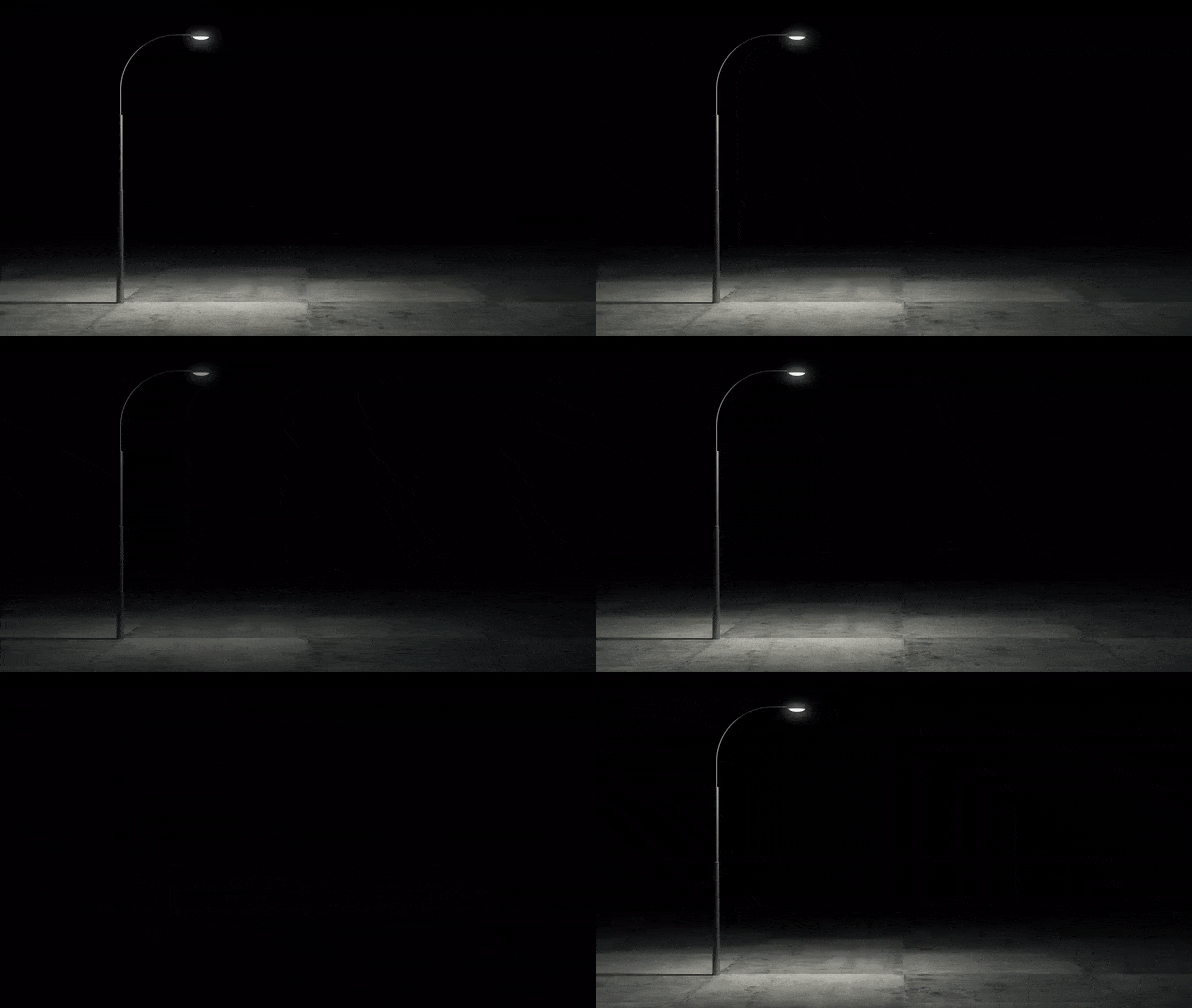
LED decay refers to the phenomenon where the luminous flux (i.e., brightness) emitted by an LED (light-emitting diode) / LED lighting fixture gradually decreases and weakens over time during use. Therefore, a coefficient is introduced in lighting design calculations to mitigate the impact of LED decay (What’s light decay and CLO?). This coefficient is called the light loss factor in the RP-8-15 standard and the maintenance factor (What’s maintenance factor?) in the CIE standard. You can understand LED light decay as a process similar to battery life degradation; after several years of use, the battery capacity may only reach about 70-80% of its original capacity. In the LED industry, when the luminous flux of a luminaire decreases to about 70% of its initial luminous flux, the luminaire needs maintenance. For this, street light repairing measures include, but are not limited to, replacing the LED modules and cleaning the glass. Of course, we can introduce light decay compensation functions to reduce maintenance required due to insufficient luminous flux. o understand standard methods for projecting this lumen degradation over time, learn how LED lifetime is calculated using TM-21 and TM-28.
Surge protection failure or contamination of lenses and enclosures
If surge protection failure or lens/housing contamination is present, street light repairing is also necessary. For example, lens aging can affect the luminaire’s light output, and in severe cases, cause color drift. Dirt on the luminaire’s housing, leaf cover, and waterproofing issues can also significantly impact street light’s lifespan. The former leads to heat buildup and subsequent malfunctions, while the latter often results in severe damage due to short circuits. Regular maintenance is required to eliminate these potential hazards. Furthermore, luminaires can also malfunction due to SPD failure when struck by lightning or subjected to induced current. Therefore, ZGSM recommends checking the SPD status during routine street light repairing or maintenance; for instance, a red indicator light on the ZGSM SPD (More about surge protection device) signifies the need for SPD replacement.
Cost of street light repairing – for reference
According to the RP-8-15 standard, road lighting systems must be maintained regularly. This standard outlines two maintenance strategies: group replacement and spot replacement. It’s worth noting that some points in the standard are still based on traditional luminaire maintenance logic; for example, when using a group replacement strategy, it still recommends replacing “LED bulbs.” The standard also compares the differences in labor costs and LED bulb costs between group and spot replacement, and points out that even with a group replacement strategy, spot street light repairs are still necessary for individual faults, as shown in the table below. The table shows that using a group replacement strategy reduces the probability of luminaire failure, thus reducing the number of spot repairs required. The comparison shows that the maintenance cost of using a “group + spot” replacement strategy is actually lower than that of using only spot street light replacement. This is mainly because the failure rate is significantly reduced after replacing LED bulbs entirely.
However, for LED luminaires, the author believes that group replacement is too costly. The estimated cost of an LED street light is approximately $100 (What’s the cost of LED street light?). Substituting this into the table above reveals that the cost of maintaining LED luminaires using a group replacement strategy will increase significantly. Furthermore, most LED luminaire failures originate from the LED driver, making simply replacing the LED module insufficient. If a complete replacement is implemented, the focus should be on the LED driver. Of course, this strategy is not entirely unsuitable for LED streetlights. With proper luminaire design, street light repairing costs can be significantly reduced. For example, designing the LED driver and LED module as easily replaceable independent units will be discussed further in the next section. Conversely, ZGSM strongly discourages the use of low-quality, inconveniently maintained luminaires in municipal projects, as the costs of replacement later will be much higher.

Different kinds of tool-free design for easy street light repairing
Tool-free open – ZGSM street lighting solution
Currently, mainstream LED streetlights widely adopt a tool-free opening design—a feature also present in many ZGSM products, such as the Hevo, Rifle, Falcon, and Leaf series. This design has gained widespread adoption because the maintenance of LED streetlights typically requires the use of aerial work platforms. Given the inherent difficulty of working at heights, the tool-free design was developed to simplify procedures and expedite the replacement process. Taking the Hevo, Rifle, and Falcon series as examples, their luminaire housings open upward to access the power supply compartment; conversely, models such as the Leaf (ZGSM Leaf series street light) and Kmini2 offer the option of opening the power compartment downward. Once the power compartment is opened, technicians can replace damaged components—such as LED drivers and surge protection devices (SPDs)—as well as inspect or tighten any potentially loose wiring connections.

Tool-free replacement of LED driver and module – ZGSM ST23 street light
The LED driver and LED module can be replaced without the need for tools—a feature equally applicable to these LED streetlights—thereby facilitating easy replacement. The Series ALCA LED street lights represent a new generation of LED street lighting products launched by ZGSM in 2025. A key distinguishing feature of this series is its innovative spring latch pin design. Thanks to this design, the main luminaire body can be detached without the use of any tools. Imagine a scenario where a batch of luminaires has been in operation for eight years and is now due for maintenance. With this locking pin design, the fixture can be easily removed and quickly replaced. The entire process requires no manipulation of the wiring, takes only about two minutes to complete, and significantly reduces maintenance costs. The removed luminaire head (containing both the LED module and the LED driver) can then undergo further inspection—for instance, to assess the remaining lifespan of the LED driver, evaluate the light degradation of the LED module, or check for any loose connections within the waterproof wiring. Following any necessary repairs or refurbishment, these components can be reused in future maintenance cycles. This process is akin to replacing a canopy light: it takes very little time to complete and requires neither damaging the ceiling structure nor rewiring the electrical connections.
More on the ZGSM Alca Series Street Lights: This series constitutes a new generation of LED street lighting products introduced by ZGSM in 2025. The product line covers a power range of 30W to 240W, boasts a luminaire efficacy of up to 176 lm/W, and offers energy savings of up to 70%. These products are configured with world-class, high-efficiency LED chips and premium power supplies, ensuring an exceptionally long service life (L70 > 100,000 hours; MTBF > 100,000 hours). The series supports multiple installation methods—including both horizontal and vertical mounting—and offers three options for pole diameter: 48mm, 60mm and 80mm. The series is ENEC certified and offers a diverse range of configuration options, including NEMA or Zhaga sockets (NEMA vs Zhaga), photocells, motion sensors, and smart controllers.

Tool-free replacement of LED driver – ZGSM customized solution
The LED driver (How to choose the right LED driver for your LED light?) is a core component of any luminaire, responsible for providing a continuous power supply to the LED chips. However, all electronic components are subject to a certain probability of failure, and LED drivers are no exception. With 21 years of experience in the industry, ZGSM has observed that the LED driver is indeed a component with a relatively higher failure rate. In such instances, rather than replacing the entire LED module, the optimal solution is to replace only the LED driver. ZGSM offers specific solutions to address this; for example, our Rifle series products feature a tool-free opening mechanism. Additionally, we can provide customers with customized, replaceable LED driver boards, as illustrated in the figure below. The primary replacement procedure consists of the following four steps: 1. Open the power supply compartment (no tools required); 2. Disconnect the input and output connections of the LED driver (no tools required); 3. Release the retaining clips securing the LED driver board; 4. Remove the driver and its mounting plate, and replace them with a new LED driver.

ZGSM LED street lighting solution
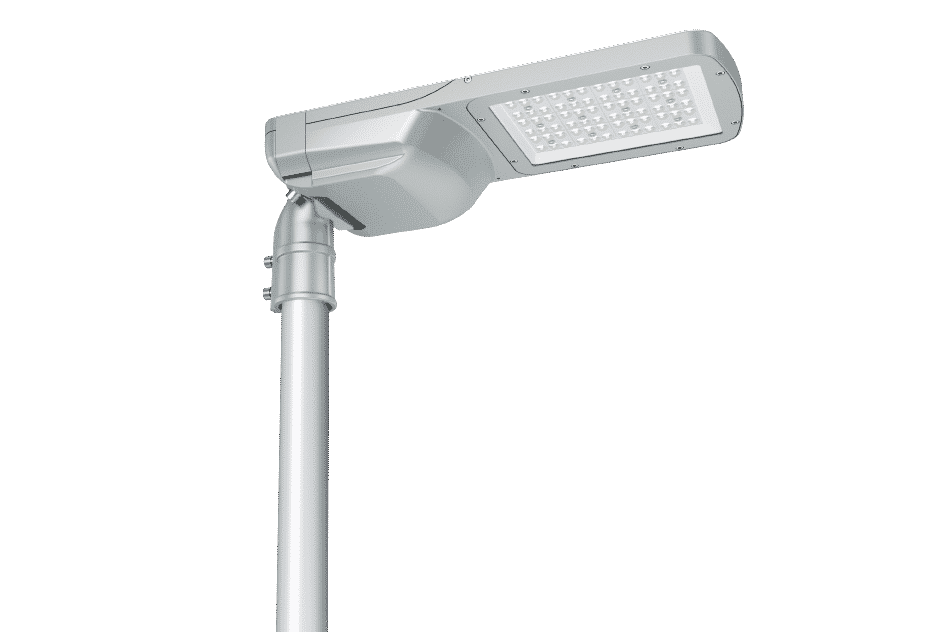
ZGSM has been engaged in the production and sales of LED streetlights for over 21 years, always considering and analyzing product needs from the customer’s perspective. To improve product reliability, our streetlights use high-quality LED drivers to extend the overall lifespan of the luminaires; simultaneously, many models feature a tool-less opening design for easy street light repairing or maintenance. In 2025, our newly launched Alca series streetlights further enabled tool-less replacement of LED modules and LED drivers, significantly improving maintenance convenience. If customers only need to replace the LED driver, we can also provide customized solutions for tool-less maintenance. Below are some representative ZGSM streetlight products, please click on the images for more information or get in touch with ZGSM.


Summary
Street lighting is crucial to urban safety and vitality, and maintenance is key to ensuring its long-term reliable operation. Traditional street light repairing faces challenges such as difficulties in working at heights and high costs. LED driver failure, light source decay, lightning surges, and lens contamination (More about street light maintenance) are the main reasons for maintenance needs. To address this pain point, tool-less design offers an innovative solution. ZGSM has launched a series of tool-less design solutions: Firstly, many of our streetlights support tool-less opening, greatly simplifying the maintenance process; secondly, customized designs support tool-less driver replacement, enabling quick replacement of core faulty components; thirdly, we have launched revolutionary models such as the ZGSM-ST23, which, through designs such as spring latch pin design, enables tool-less rapid replacement of LED drivers and even the entire lamp head. These innovative designs shift the focus of maintenance from replacing the entire lamp to the convenient replacement of core modules, significantly saving labor and component costs, proving that tool-less design is a strategic direction for reducing the total life-cycle maintenance cost of streetlights and creating more practical and economical lighting systems.
Related Products


Related Blogs


Related Cases


People also ask
Author introduction

Hello Customers,
My name is Taylor Gong, I’m the product manager of ZGSM Tech. I have been in the LED lights industry for more than 13 years. Good at lighting design, street light system configuration, and bidding technology support. Feel free to contact us. I’m happy to provide you with the best service and products.
Email: [email protected] | WhatsApp: +8615068758483