
How to realize energy efficient lighting in street lighting?
How to realize energy efficient lighting in street lighting?
Introduction
When discussing energy efficiency in the lighting field, we must first move beyond the misconception of focusing solely on luminous efficacy. In practical engineering, lighting is far more than just a matter of “brightness”; its core is always whether it can support efficient and safe operational processes. Currently, global standards for different lighting scenarios are quite mature. For the specific segment of road lighting, there are clear industry benchmarks. The performance indicators for road lighting are primarily set according to EN 13201 (More about EN 13201 road lighting standard), which is the core standard for measuring road surface illuminance/brightness, uniformity, and glare control. In addition, workplaces (EN 12464), stadiums (EN 12193/RP-8-21), and tunnels (CIE 88) all have their own rigorous specifications. These standards collectively constitute the “bottom-line requirements” for lighting design. Since entering this industry in 2005, ZGSM has witnessed technological iterations and the continuous changes in customer needs, and road lighting has achieved significant development over the years. An excellent road lighting solution must meet basic safety requirements (i.e., the relevant requirements of EN13201 standard) while also considering higher visual comfort, energy efficient lighting, and intelligent management. Ideally, road lighting should optimize energy consumption while strictly adhering to all safety standards and ensuring comfortable passage for pedestrians and vehicles, and simultaneously incorporate intelligent management. Let’s delve into the main text to learn more.
Problems of inefficient street lighting
Low efficiency and high failure risk of streetlights
From early gas lamps and incandescent bulbs to later high-pressure sodium lamps, and now to the mainstream LED streetlights, lighting technology has achieved a tremendous leap in luminous efficacy. However, a large number of lamps on the market still fall far short of luminous efficacy standards. This is often due to manufacturers using inferior LED chips or inefficient LED drivers to cut costs. These products not only have low initial luminous efficacy but also face serious light decay problems, making it difficult to meet road lighting standards shortly after being put into use. In addition, unreasonable lamp structure design, such as improper heat dissipation, coupled with the drag from inferior drivers, greatly increases the risk of premature lamp failure, forcing users to perform frequent maintenance and incurring additional expenses. Therefore, fundamentally solving the two major problems of low luminous efficacy (What’s luminous efficacy and how to improve it?) and easy damage in lamps has become the most urgent core issue to be addressed. All of these make street lights less energy efficient lighting for roadway applications.
Improper light distribution of streetlights leads to light pollution
Luminous efficacy is a key indicator of lighting efficiency, directly reflecting the ability of a luminaire to convert electrical energy into light energy. However, in actual use, not all the light emitted by a luminaire falls on the surface that needs illumination. For example, with traditional high-pressure sodium lamps, a significant amount of light is scattered into non-target areas such as the roadside. The amount of light accurately projected onto the illuminated area largely depends on the rationality of the light distribution design. LED luminaires can use secondary optical lens design to make the light distribution more closely match the actual scene: batwing light distribution is commonly used for road lighting, narrow beam or asymmetrical light distribution is used for stadium lighting, and rectangular light distribution is used for shelf lighting, etc. In lighting applications, we often encounter problems such as unreasonable light distribution curve selection, improper installation, or excessive tilt angle. These can all cause the light emitted by the luminaire to shine into non-illuminated areas, resulting in light pollution—light trespass (Light trespass in street and sports lighting), skyglow, and glare, etc. Scientific light distribution combined with optimized lighting design can significantly improve the brightness and uniformity of the road surface while effectively reducing glare, which is also energy efficient lighting. This method also works well in stadium lighting and indoor lighting, truly achieving “illuminating where it should be illuminated, without disturbing where it shouldn’t be.”

Streetlights without smart control technology
In today’s era of advocating low-carbon and refined management, the lack of intelligent control in road lighting systems represents a significant hidden waste. Traditional streetlights mostly employ simple time-controlled or photocell (Something about photocell), achieving only a crude “turn on at sunset, stay on all night, turn off at sunrise” model. This is completely inadequate to meet the actual lighting needs during the late night when traffic is light, resulting in unnecessary waste and negative environmental impacts. Besides energy waste, streetlights without intelligent control cannot proactively report faults, relying on maintenance personnel inspections and citizen complaints, which increases labor costs and potential economic losses. Modern intelligent control systems have completely changed this situation (Less energy efficient lighting). These control methods include timer dimming, motion sensors, and intelligent control, among others. Their functions and benefits will be explained in the next section.
Difficulties in streetlight maintenance
The maintenance cost of street lighting has always been a concern for municipal departments, which is another reason why LED streetlights have become popular in recent years (mainly due to their high luminous efficacy). In practical applications, the maintenance difficulties caused by LED streetlight malfunctions or the long-term burden of frequent maintenance often exceed the initial purchase cost. Traditional high-pressure sodium lamps have proven to require regular replacement of bulbs and ballasts. You may have noticed that streetlights in older neighborhoods often go out; this is a sign of a traditional lamp malfunction. Repairs are only carried out after residents report the problem, resulting in high costs and long response times. In special areas such as overpasses, expressways, or high-mast lighting (ZGSM high mast lighting solutions), maintenance personnel also need to perform high-altitude operations, increasing both safety risks and maintenance difficulty. Modern street lighting (LED streetlights) is evolving towards maintenance-free or easy-to-maintain solutions, addressing the aforementioned issues. A detailed analysis will follow in the next section.
Severe light decay and without CLO function
In the section on luminous efficacy, we mentioned the issue of light decay (What’s light decay?). Light decay is an unavoidable physical characteristic of lighting fixtures; essentially, it’s the decrease in the efficiency of the light source in converting electrical energy into light energy during use. This problem exists in incandescent lamps, high-pressure sodium lamps, and LED lamps, and is not uncommon. During lighting simulations, we should all have encountered the concept of maintenance factor. Essentially, it’s a prediction of future light decay, usually calculated using LM80 and TM21 tables. Its essence is to consider that the light emitted by the lamp will decrease after a period of use, therefore this factor needs to be taken into account at the beginning of the lighting design. While using a higher wattage to illuminate the target area initially means some energy waste in the early stages, the advantage is that it ensures that the target area still receives sufficient brightness in the later stages of lamp operation. The greater the light decay, the higher the initial wattage of the lamp. Therefore in practical applications, we need to use LED lamps with lower light decay to get more energy efficient lighting. At the same time, regular maintenance/cleaning of the lamps (mainly the light-emitting surface) is required to reduce the phenomenon of light decay caused by dust and dirt, so as to achieve stable and compliant lighting effects at a lower cost.

Ways to realize energy efficient lighting in street lighting
Streetlights with high-efficiency LEDs and high-quality
The key to solving the problems of inefficient and easily damaged lighting equipment lies in establishing a complete closed-loop management system covering product selection, design, verification, and maintenance. First, strict control should be implemented at the source, using qualified LED chips and LED drivers. We need to clearly define key indicators, including brand, luminous efficacy, light decay, driver efficiency, and lifespan, to fundamentally avoid using inferior components. Second, in product design, attention should be paid to the matching of electrical parameters and the reliability of the heat dissipation structure. This helps LEDs maintain their rated luminous efficacy and reduces the impact of high temperatures on the overall lifespan of the luminaire. During the design verification phase, testing should be conducted in a darkroom or using an integrating sphere to confirm that the actual luminous efficacy meets design requirements. Simultaneously, the luminaire’s Ts temperature should be measured to evaluate heat dissipation performance. Where conditions permit, luminous flux decay testing can be performed according to standards such as IEC 62717, IEC 62722, and ENEC+ (ZGSM ENEC+ street lights) to evaluate its long-term performance over its lifespan. Although high-quality LEDs and LED drivers require a higher initial investment, they significantly reduce the frequency and cost of later maintenance. Therefore, purchasing decisions should not be based solely on low prices but also on energy efficient lighting.
Optimized optical design and lighting simulation
To address issues such as light energy waste, light pollution, and poor lighting effects caused by improper light distribution, a systematic solution can be achieved through optimized optical design and standardized construction and installation. Firstly, ZGSM luminaires offer a variety of light distribution curves to choose from. For example, streetlights offer common light distributions like Type IIM and Type IIIM. We can also customize Type IV light distributions for parking lot lighting, or asymmetrical light distributions (both lateral and vertical light distribution) for pedestrian lighting. Light distribution curves vary significantly depending on the application scenario. For instance, narrow beams or asymmetrical light distributions (different from street light optics) are suitable for sports fields, while rectangular light distribution curves are more appropriate for warehouse shelving lighting. If you are interested in these application scenarios, please contact us or refer to our blog – Light distribution of LED lights. Furthermore, the selection of light distribution curves relies on experienced lighting designers who can quickly select suitable light distributions based on the lighting scenario and verify them in lighting simulation software. By optimizing the lighting design, they can precisely position each luminaire, standardize installation angles or aiming points to guide installation. Optimized lighting designs deliver outstanding performance in lighting uniformity, glare control and energy saving, achieving precise lighting, i.e., energy-efficient lighting.


Application of smart controls: timer dimming and wireless lighting control
There are many ways to implement intelligent control of LED streetlights. Here, we focus on timer dimming ( A proper solar street light timer dimming strategy helps balance energy saving and lighting performance by adjusting brightness according to traffic volume and nighttime usage patterns.), microwave sensing, and smart street lighting control (wireless). Through timer dimming, the system can automatically reduce power to a certain level (e.g., 50%) according to a preset time period (e.g., midnight to 5 am), achieving immediate energy savings. A proven track record can be found in our recent commercial area LED street light Malaysia project, where smart dimming profiles successfully saved energy for local shoplot streets without compromising safety. Crucially, this function is usually built into the LED driver, but many customers are unaware of this, leading to its ineffective use. Compared to timer dimming (Timer dimming -Astrodim in street lighting), microwave and intelligent control functions require additional costs, but they offer more functionality and are easier to implement as energy efficient lighting. LED streetlights are equipped with microwave or infrared motion sensors, enabling them to detect pedestrians and vehicles. When a vehicle or pedestrian approaches, the LED streetlight can wake up from low brightness to full brightness, automatically returning to a low-power sleep mode after the pedestrian or vehicle passes, thus reducing power consumption. Smart street lighting control requires the streetlight to be equipped with a lamp controller, which is normally installed on top of the lamp via a Zhaga or NEMA socket (NEMA vs Zhaga). Through the concentrated controller unit (gateway), we can control the switching, dimming, and data reading of lights online, thereby achieving efficient management and operation of the lights.

Tool-free design and modular design
Easy maintenance and maintenance-free operation are the two core advantages of LED streetlights. Firstly, high-quality LED streetlights experience slower light decay compared to traditional luminaires, with a lifespan typically reaching 50,000 to 100,000 hours, significantly extending the replacement cycle. Secondly, high-quality LED drivers offer higher reliability (higher MTBF and longer lifespan) and a lower failure rate, thus requiring minimal repair or replacement. Based on these two points, many manufacturers position LED luminaires as maintenance-free products. Furthermore, modular design and tool-free opening (Tool-free design for street lights) structures have become mainstream configurations for LED streetlights. When a luminaire malfunctions, maintenance personnel can open the cover without tools and directly replace the faulty component, significantly reducing on-site operation time. Modular design also simplifies the maintenance process; only the corresponding modules need to be stocked, eliminating the need for in-depth knowledge of electrical parameters, allowing for efficient maintenance. Combined with intelligent control systems, municipal maintenance personnel can also promptly detect faults and initiate maintenance. Compared to traditional luminaires, LED streetlights significantly reduce maintenance costs and time throughout their entire lifecycle, and offer much faster fault response.
Low light decay design and the application of CLO
Light decay is a major concern for both buyers and sellers in the LED industry. A simple solution to avoid additional power consumption due to light decay is to choose products with lower light decay. For this, we recommend customers carefully review the manufacturer’s test reports, with the TM21 report being the most basic. The LM80 and ISTMT reports should also be considered, and all reports should be issued by a third-party laboratory with ISO17025 accreditation. L70 > 100,000hrs is a common selection standard, while L80 > 100,000hrs and even L90 > 100,000hrs are better choices, placing higher demands on luminaire performance. In the problem description, we mentioned the concept of the maintenance factor, which refers to selecting higher-power LED streetlights from the initial lighting design stage to meet the lighting needs of the target area. Factors affecting the maintenance factor include the lamp lumen maintenance factor, which is light decay. The slower the light decay, the higher this value, resulting in a correspondingly higher maintenance factor and a suitable reduction in the initial power of the luminaire. However, this method still leads to initial energy waste, hence the development of the Constant Lumen Output (CLO) solution. Currently, many driver power supplies possess this function, such as Inventronics’ EUM series, Philips’ FP series, and brands like Tridonic. With this technology, the luminaire power can gradually increase over time to compensate for the decrease in luminous flux caused by light decay, thus achieving highly energy efficient lighting. Simultaneously, regular maintenance and cleaning of the luminaires (primarily the luminous surface) are necessary to reduce light decay caused by dust and dirt obstruction. For more information, please refer to our blog – Maintenance factor in illumination lighting.
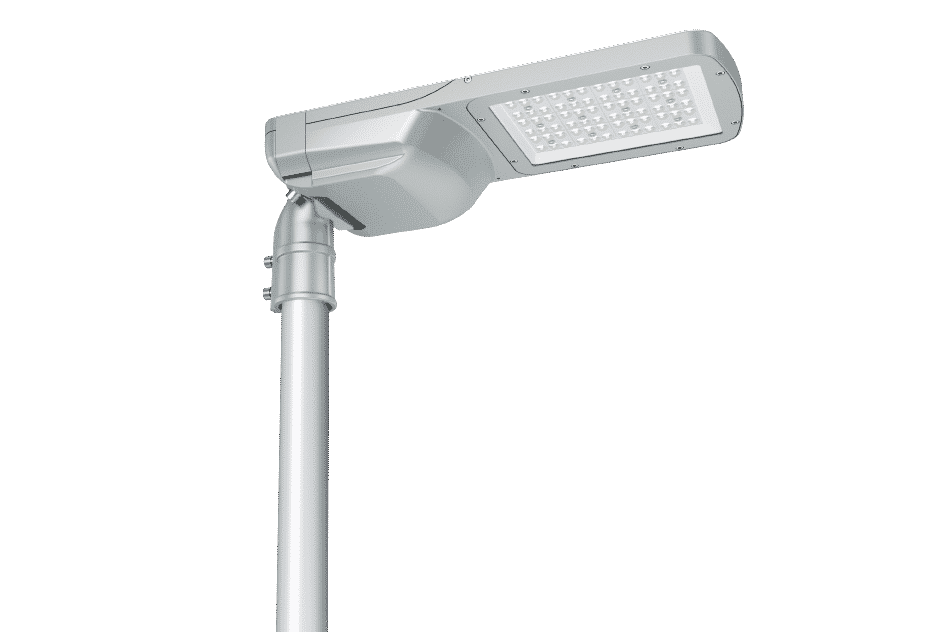
ZGSM LED street light


Summary
There are five main reasons why street lighting cannot effectively achieve energy efficient lighting. First, many streetlights use inferior LED chips and LED drivers, resulting in low overall luminous efficacy and frequent malfunctions. Second, unreasonable light distribution leads to ineffective illumination of target areas, while also causing light pollution and glare (What’s glare and how to reduce it in lighting?). Third, there is a lack of intelligent control, such as traditional timer dimming to save energy while meeting the lighting needs of low traffic flow in the late night. Fourth, streetlights are difficult to maintain, leading to high maintenance costs. Fifth, severe light decay and the lack of CLO technology result in long-term energy waste. These factors cause LED streetlights to consume more energy during their lighting cycle; however, these factors are avoidable. ZGSM proposes its own solutions to address these problems. By strictly controlling the quality of LED chips and drivers, we can improve the reliability and luminous efficacy of luminaires from the source; select appropriate light distribution curves according to different scenarios, and combine lighting simulation verification schemes with installation guidance; apply timer dimming, microwave sensing, and wireless intelligent control systems to achieve on-demand lighting and proactive fault reporting; adopt modular and tool-free structural designs to reduce maintenance difficulty and total life cycle costs; select optimized heat dissipation structures and high-quality LEDs to reduce light decay, and introduce constant lumen output technology to dynamically compensate for power loss with light decay, saving excessive power consumption of LED streetlights in the early and mid-stages. Through these measures, we can achieve energy efficient lighting for roads. If you are interested in any of these methods, please contact us for more information.
Related Products


Related Blogs


Related Cases


People also ask
Author introduction

Hello Customers,
My name is Taylor Gong, I’m the product manager of ZGSM Tech. I have been in the LED lights industry for more than 13 years. Good at lighting design, street light system configuration, and bidding technology support. Feel free to contact us. I’m happy to provide you with the best service and products.
Email: [email protected] | WhatsApp: +8615068758483